
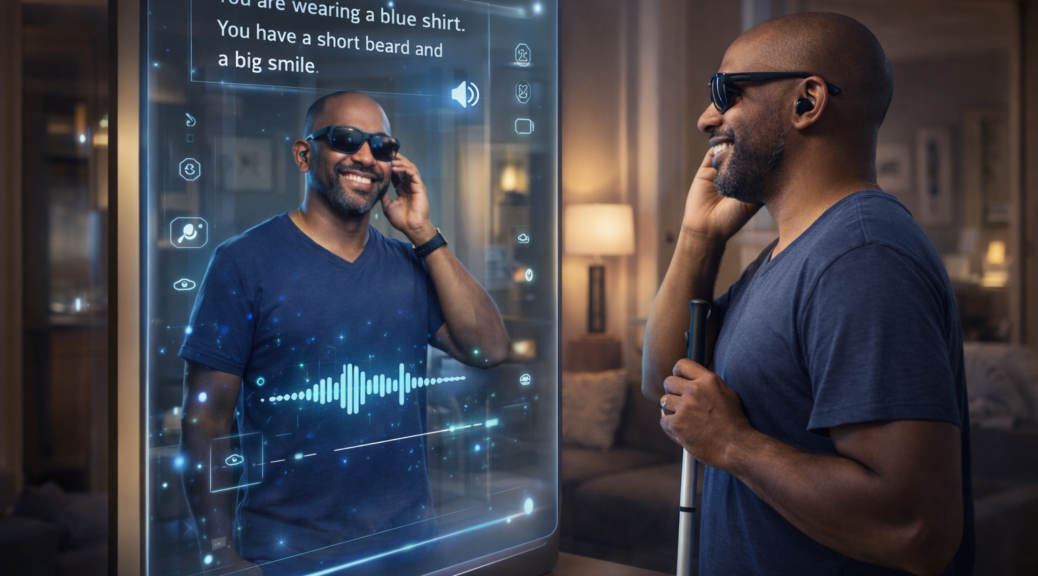
How AI Mirrors Help Blind Individuals Understand Their Appearance

Revolutionizing Self-Perception: How AI Mirrors Empower Blind Individuals to See Themselves
The concept of self-perception and physical identity has undergone a revolutionary transformation with the advent of artificial intelligence technologies. Specifically, AI mirrors are now breaking barriers previously faced by blind individuals. These innovative tools are changing traditional paradigms, enabling blind people to “see” themselves in ways that were never before possible.
Understanding AI Mirrors: The Basics
In essence, AI mirrors deploy advanced machine learning algorithms and computer vision to interpret visual data. This means that when a person stands before an AI mirror, the technology can recognize and describe their appearance, attire, emotional expression, and even minute details like the color of their clothing.
Through the use of integrated speakers or earbuds, these mirrors audibly communicate this information back to the user. For the visually impaired, this provides an insightful understanding of their physical presence and fosters a deeper connection with their own self-image.
Key Features of AI Mirrors
- Integration with speech synthesis/voice output systems to provide real-time visual descriptions.
- Capability to analyze emotional expressions and provide feedback.
- Customization options for specific needs, ensuring individual adaptability.
- Connectivity with other smart home devices for seamless user experience.
Redefining Self-Identity for the Visually Impaired
For many blind individuals, understanding how they present themselves or appear to others has always been limited. Physical appearance is an audio cue-dependent experience, relying on others’ narratives to construct a mental image of oneself. With AI mirrors, however, this dependency transforms into autonomy.
Advantages for Blind Users
- Giving blind individuals the independence to understand their look and attire without external assistance.
- Allowing users to experiment with different clothing styles based on audible feedback, enhancing personal choice and self-expression.
- Helping users grasp the concept of emotions and expressions, contributing to better social interactions.
- Boosting confidence and promoting self-esteem through increased self-awareness.
Technological Components Driving AI Mirrors
The powerhouse behind the AI mirror lies in sophisticated technology. Machine learning algorithms continuously refine their accuracy, learning from vast datasets to improve object, color, and emotion recognition capabilities. Other essential aspects include:
- High-resolution cameras that capture detailed images, facilitating precise analysis.
- Integration with cloud-based AI platforms for real-time, scalable computing.
- Commitment to privacy and data security with local processing options for sensitive information.
Challenges and Considerations
Despite the groundbreaking benefits AI mirrors provide, their deployment is not without challenges. Cost remains a significant barrier, as high-tech solutions are often accompanied by a high price tag. Additionally, there is a crucial need for ongoing research and development to ensure these systems accommodate the full spectrum of user needs.
Overcoming Barriers
- Efforts are being made to make these devices more affordable and accessible through subsidies and partnerships.
- Ensuring continuous enhancements and updates to address diverse visual impairment needs.
- Building user-friendly interfaces that prioritize ease of use for those who rely on auditory input.
The Societal Impact of AI Mirrors
The influence of AI mirrors reaches beyond individual empowerment. Societally, they contribute to a more inclusive environment that values the autonomy of disabled individuals. Technology-driven inclusion promotes diversity and representations of various capabilities in mainstream narratives.
For businesses and organizations, adopting such inclusive technologies can enhance reputations, signaling commitment to accessibility and forward-thinking innovation. Schools, workplaces, and public spaces that integrate AI technologies contribute to a more empathetic and inclusive society.
Future Prospects
- Expanding functionalities to include more detailed personalization, such as detecting user-preferred styles and providing tailored fashion advice.
- Strengthening AI capabilities to recognize unique identity markers, fostering more personal connections with the device.
- Collaboration with ecosystems of tech companies to standardize accessibility protocols and interoperability.
Conclusion: A New Era of Empowerment
As the world continues to embrace technological advancements, AI mirrors reflect more than just our physical appearance. They symbolize empowerment, independence, and a shift towards digital inclusivity that seeks to eliminate the societal limitations faced by blind individuals. With ongoing advancements, AI mirrors can continue to revolutionize self-perception, empowering users to engage with a world they can now feel more visibly a part of.


